March 12, 2026
Wisconsin Probationary License Rules Explained (what new drivers can & can't do)
Wisconsin Probationary License: What New Drivers Can (and Can't) Do
Passing your road test is a huge moment — but earning your probationary license isn't the finish line. It's actually the beginning of a critical phase in your driving journey. Wisconsin's Graduated Driver License (GDL) program places specific restrictions on new drivers for good reason, and knowing the rules upfront can save your teen from costly surprises.
Here's a plain-language breakdown of what probationary license holders in Wisconsin need to know.
What Is a Probationary License?
A probationary license is Wisconsin's version of a "training wheels" license. It gives new drivers the freedom to get behind the wheel independently — but with guardrails in place to build experience safely before full privileges kick in.
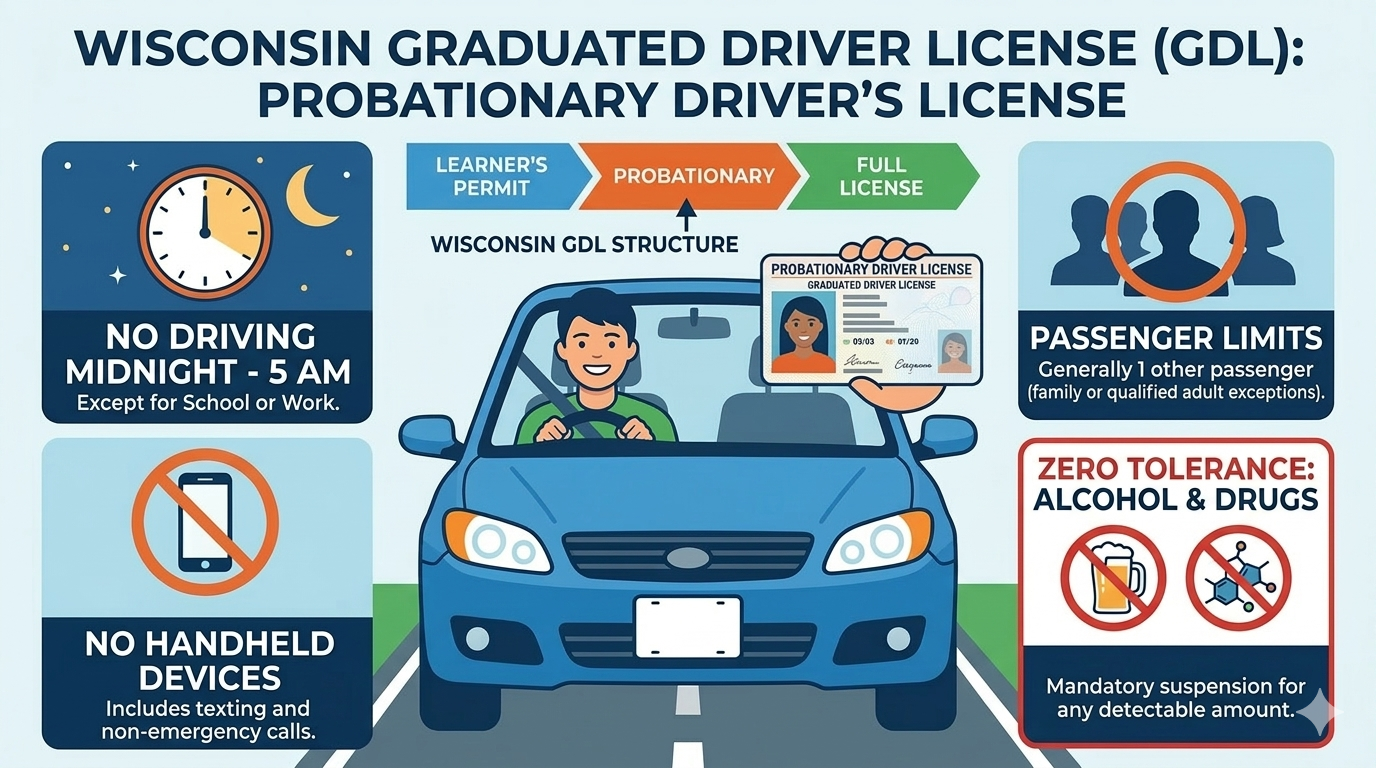
The Two Big Restrictions (First 9 Months)
1. Passenger Limits
Only one passenger other than immediate family members or driving instructors is allowed when driving. So your teen can drive a sibling and one friend — but they can't pack the car with classmates. This rule exists because passenger distractions are one of the leading causes of teen crashes.
2. Nighttime Curfew
Probationary drivers may drive alone except from midnight to 5 a.m., unless they are driving to and from school or their place of work. Driving for any other purpose during those hours requires a licensed adult in the vehicle.
These two restrictions apply for the first 9 months of holding the probationary license, or until the driver turns 18 — whichever comes first.
The Demerit Point System: A Double-Edged Sword
This is the part most families don't know about until it's too late. Points for moving violations double after a probationary driver has received their first conviction. While they still have the same 12-point limit as a regular driver, their points total will accelerate much faster.
In plain terms: one speeding ticket can put your teen dangerously close to a suspension. Driving clean isn't just good habit — it's essential.
What Happens If You Break the Rules?
Restrictions will be extended for six months if the student commits a moving violation, has their license suspended or revoked, or violates the passenger or curfew restrictions. That means the clock resets — and your teen stays restricted longer.
When Do the Restrictions Lift?
Once the 9-month period is up and your teen turns 18 with a clean record, the passenger and curfew restrictions are lifted automatically. At 19, the probationary license converts to a full, unrestricted Class D license — provided the driving record stays clean.
Bottom Line for Parents
The probationary phase isn't meant to be a punishment — it's a proven safety system. The best thing families can do is stay involved, keep communication open, and make sure their new driver understands the rules before they ever pull out of the driveway.
At Get in Gear, we prepare students not just to pass the test — but to drive smart long after the test is over.
Get in Gear Driving School
📞 (608) 291-7531
✉️ onlineclass@getingeardrivingschool.com
.png)